CAE & HPC
Verification, calibration, and automation-heavy modeling systems
Since the early days of my career, I have been fascinated by replicating real-world physical processes through precise digital models. Simulation modeling makes it possible to test designs, explore "what-if" scenarios, and gain insights that are often impossible to obtain through physical experiments alone.
In agricultural machinery, interactions between materials and components are especially complex. Over time, DEM (Discrete Element Modeling) and CFD (Computational Fluid Dynamics) became indispensable in my work: DEM for particles such as grain, straw, or soil; CFD for liquid and gas flows. Together, they provide a deep understanding of the internal physics behind agricultural machinery performance.

Simulation modeling introduction · Open on YouTube if the player asks you to sign in
How I'm bringing AI into this domain
For 14+ years this domain has been my home — and it's exactly where I now apply AI. The bottlenecks I know first-hand (slow model setup, expert knowledge locked in manuals and heads, verification that doesn't scale) are the problems AI is finally able to attack: engineering copilots grounded in documentation, simulation surrogates and physics-informed ML, and automated digital-twin pipelines.
What makes AI actually work in CAE is the same verification culture that keeps simulation credible: models judged against physical reality with explicit acceptance criteria and measurable error budgets (e.g., under 5% deviation in field validation), calibration workflows, and controlled experiments. I bring that discipline into AI systems — mandatory citations instead of unverifiable answers, golden evals instead of demos, out-of-sample validation instead of peeking at holdout data.
CAE Copilot is the working example: a traceable copilot for engineering documentation and calculations, built with production MLOps discipline (tests, CI, Kubernetes). A model that's wrong in a way that looks right is the failure mode both worlds share — and the one this background is built to catch.
Projects
Flagship Project – H820 Grain Harvester
After two years of intense development — proud of the outcome.
Goal: Provide simulation modeling (DEM/CFD) support for the development of an 8th-class grain harvester.
- Designed the H820 harvester with a hybrid threshing system.
- Completed field tests (March – November 2024).
- Received the "Golden Star" award at AGROSALON 2024.
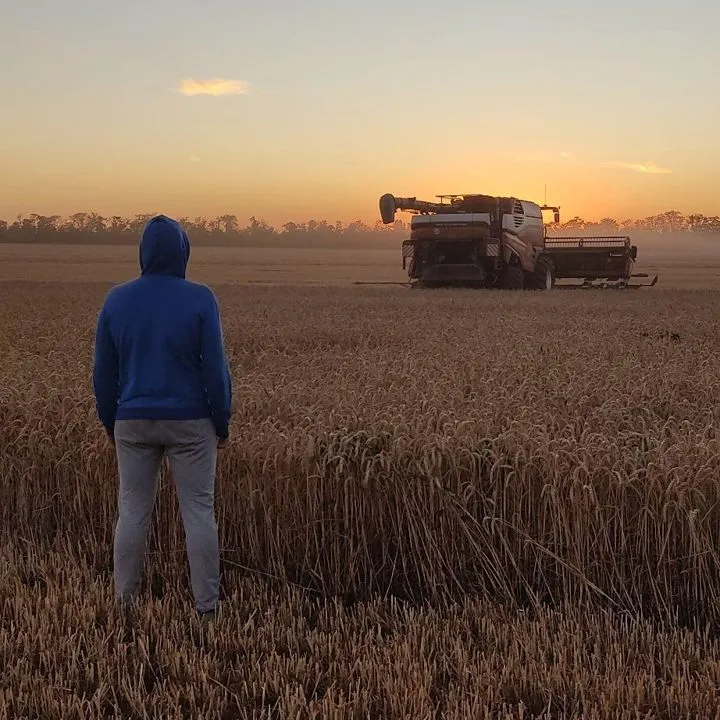

H820 field tests · Open on YouTube if the player asks you to sign in

H820 development · Open on YouTube if the player asks you to sign in
Grain Cleaning System
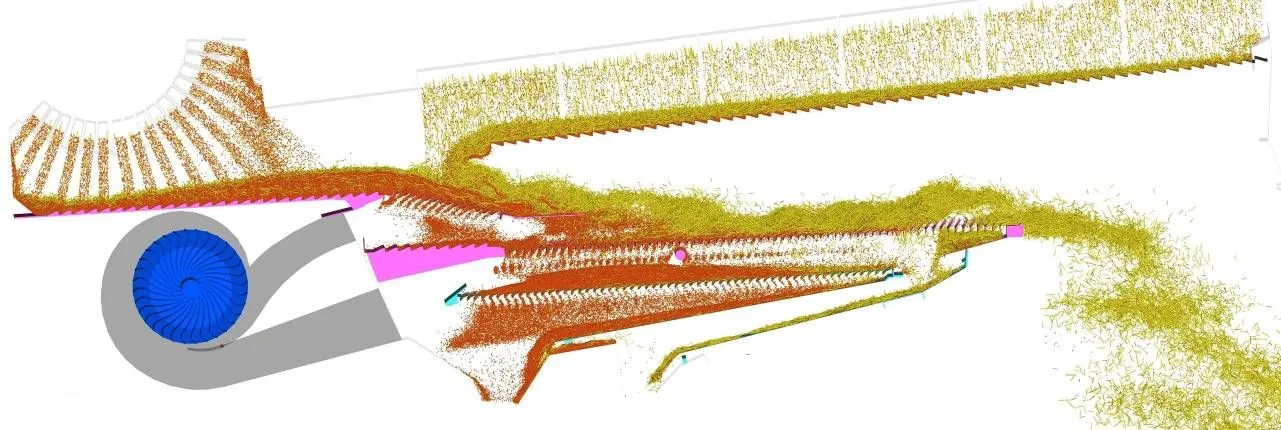
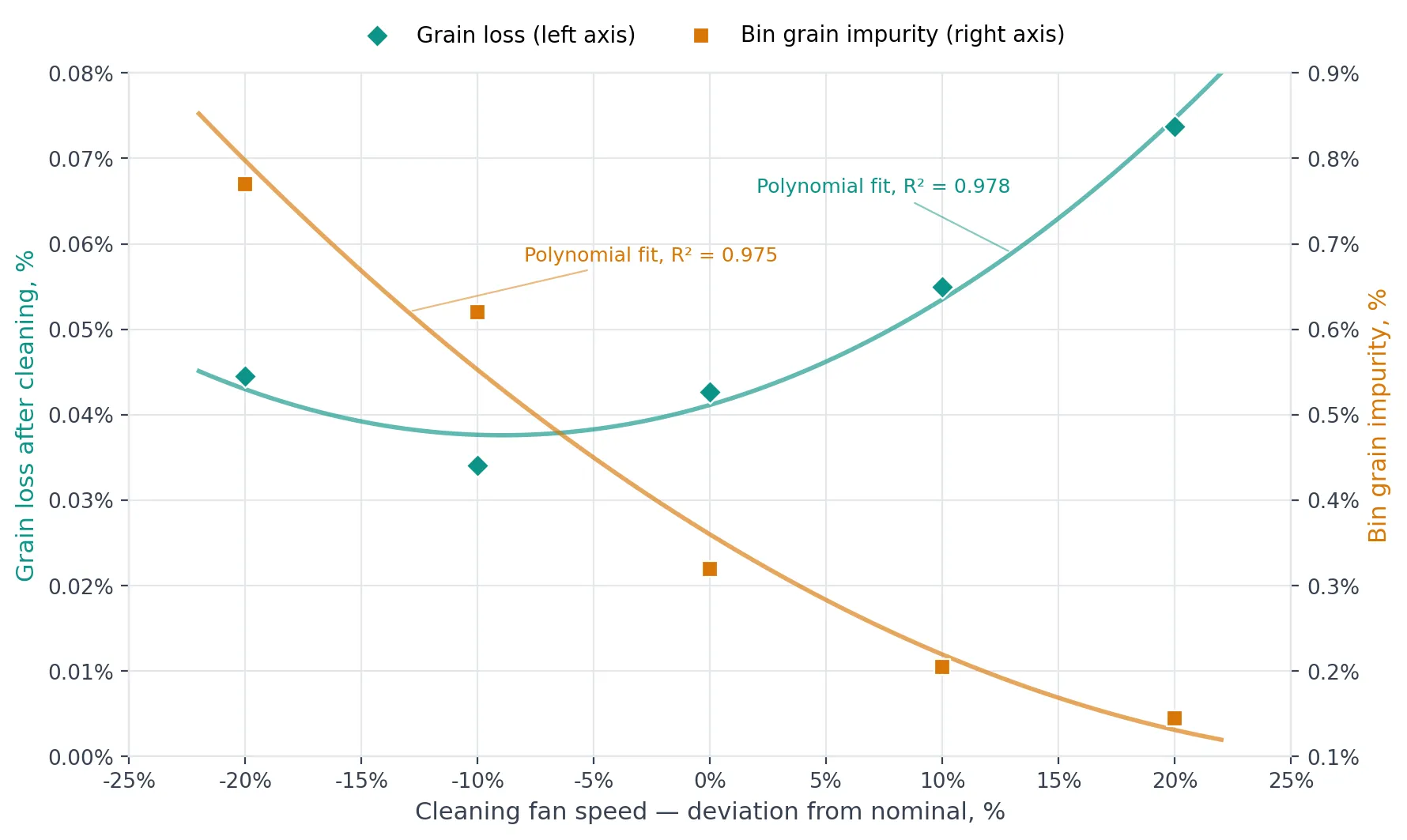
Goal: Develop a cleaning system for the harvester that ensures high efficiency and minimal grain loss.
- Field tests confirmed the system met target performance levels obtained in simulation.
- Deviation in post-cleaning grain loss and bin grain impurity metrics was under 5% compared to experimental values.
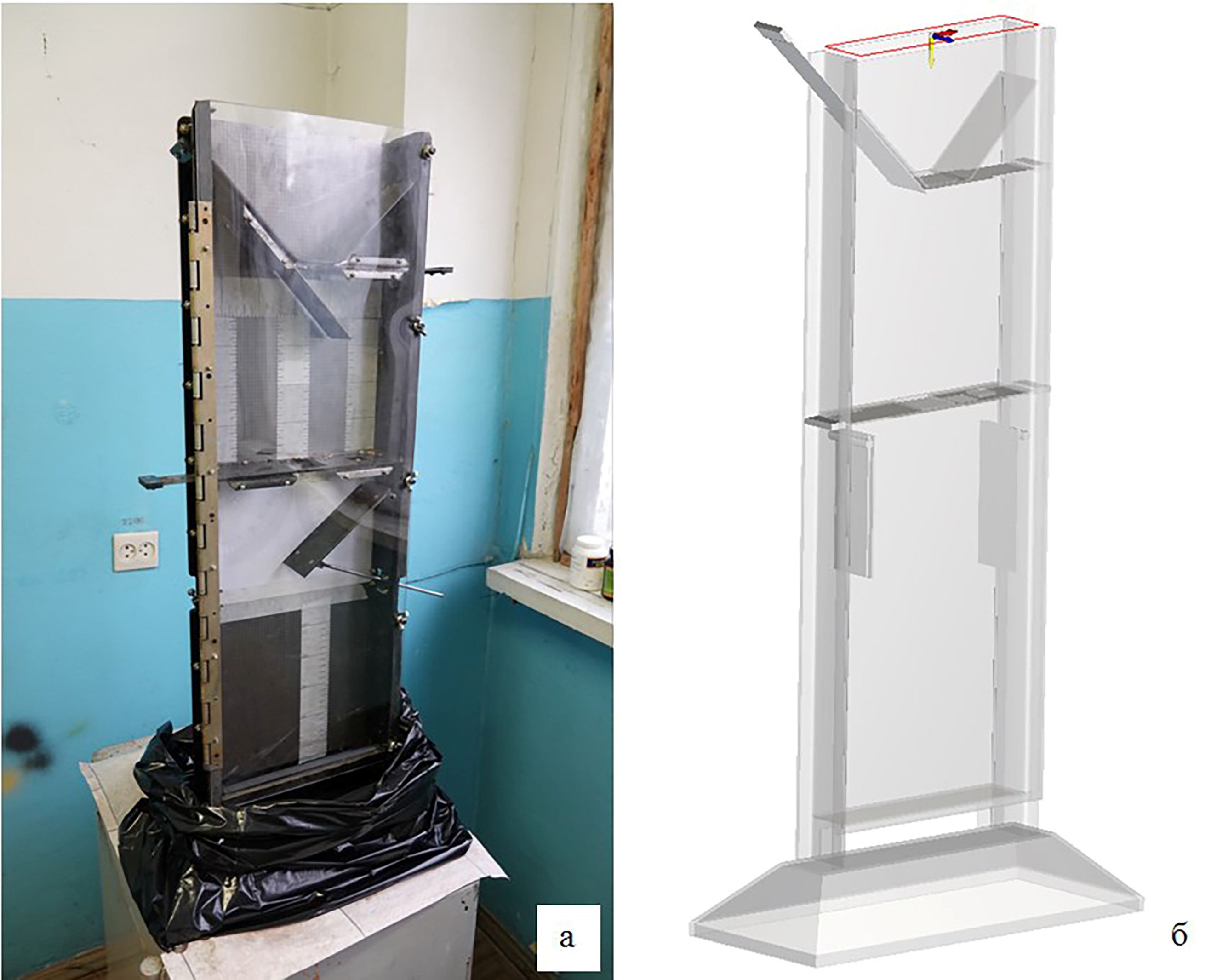
Test Rig for Verifying Crop Properties
Goal: Determine mechanical properties of crops for DEM/CFD modeling.
- Design a test rig for crop property verification.
- Conduct testing and data collection.
- Build a digital crop model.
- Analyze results and integrate data into the development workflow.
- Created a digital model of cereal crop material flow.
- Article on the test rig (CADFEM Review, Issue 07, 2020, p. 13): PDF
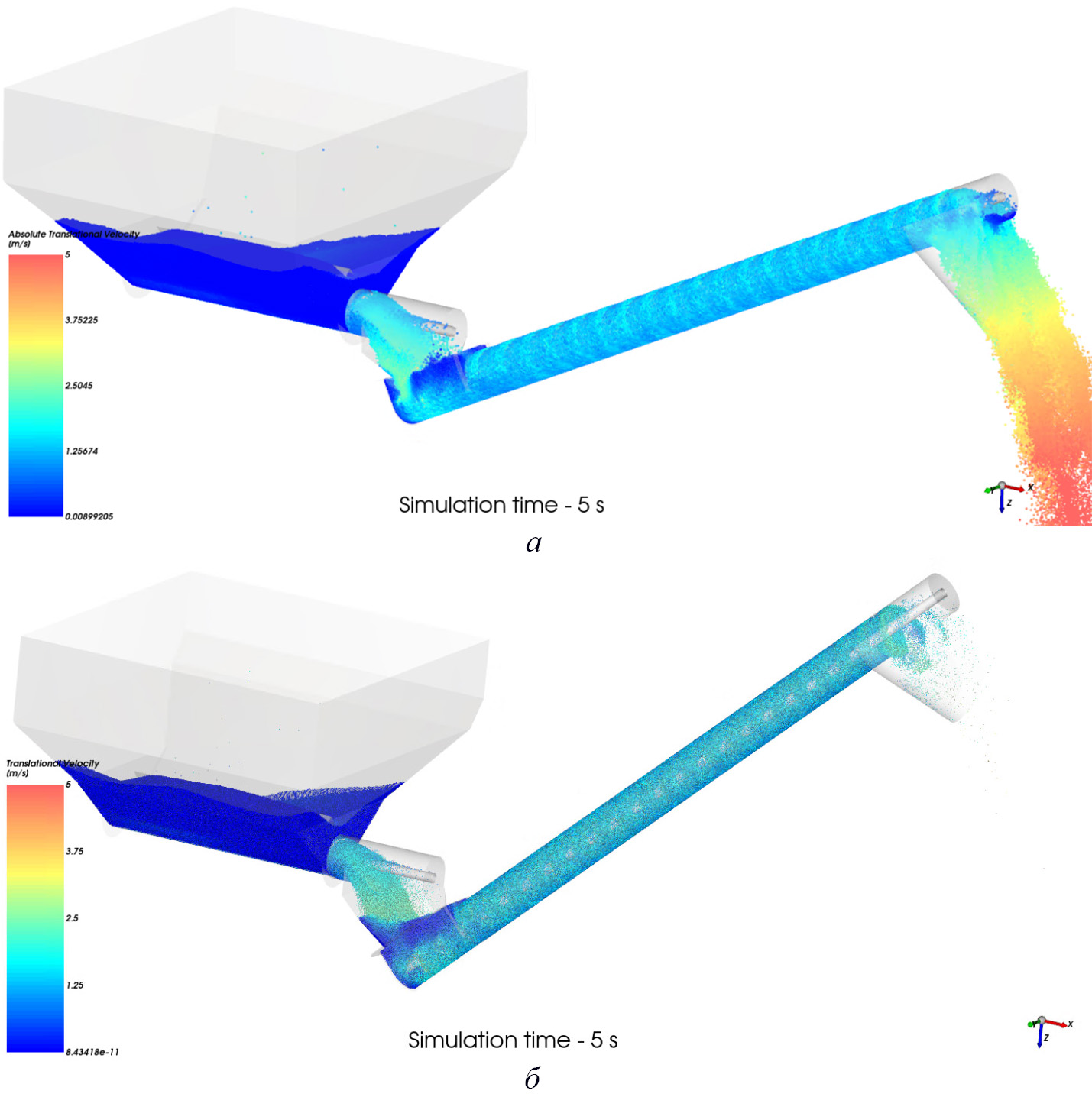
Grain Unloading System from Hopper
Goal: Analyze grain unloading dynamics from the hopper with varying auger tilt angles.
- Obtained data on how auger angle affects unloading rate and efficiency.
- Developed recommendations to optimize the transfer zone by increasing feed area.
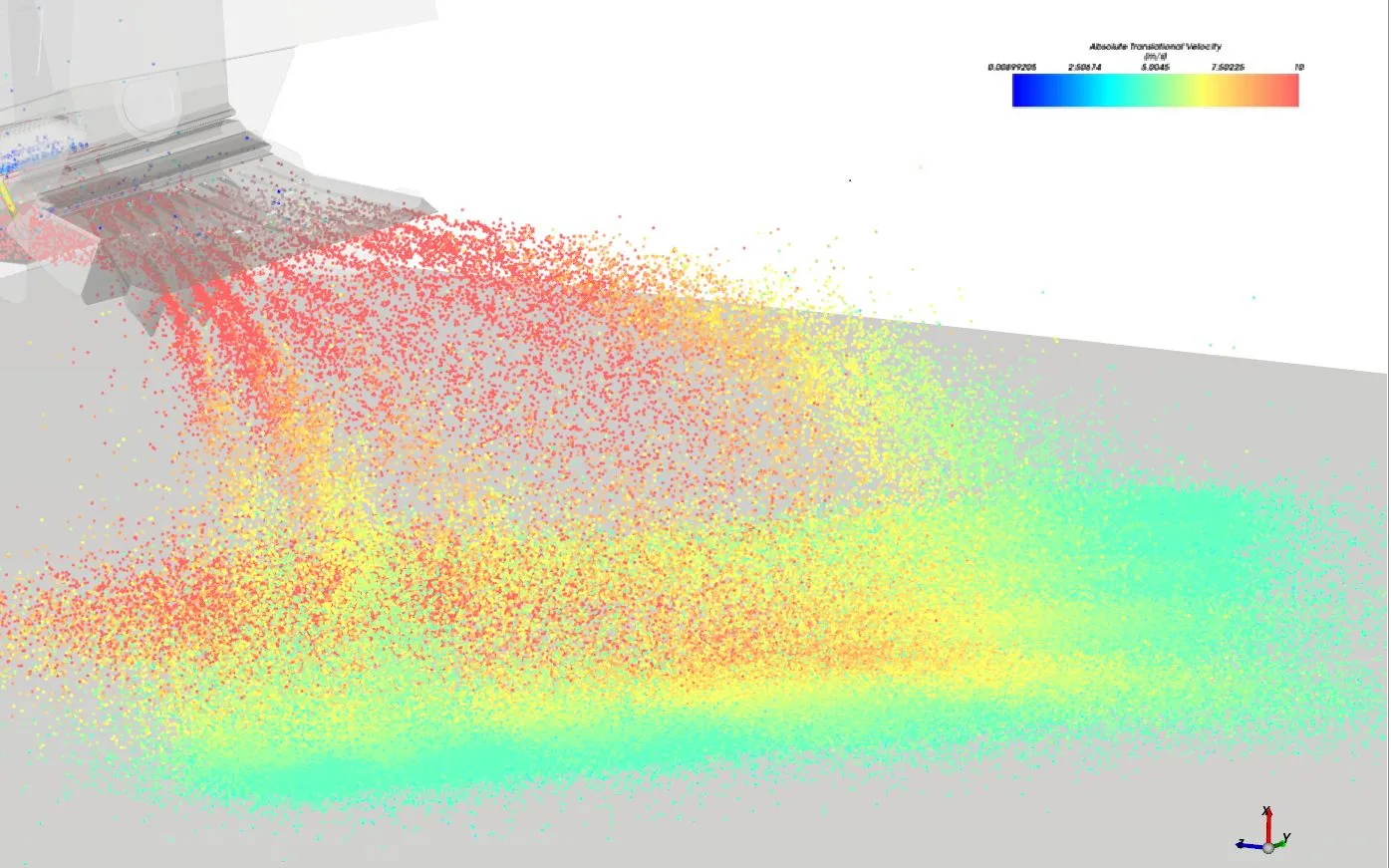
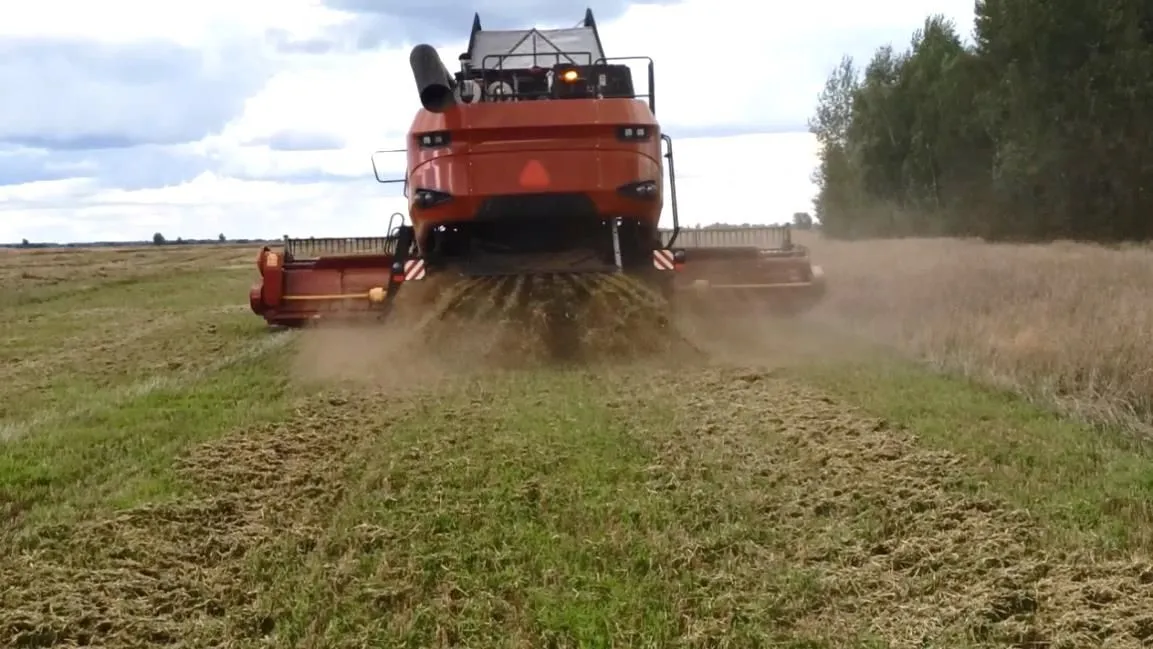
Straw Chopper-Spreader for Uniform Field Distribution
Goal: Increase the width and uniformity of straw distribution across the field.
Results: Target distribution metrics were confirmed during field testing.
Hard Skills
- DEM (particle/bulk material flow): Ansys Rocky, Altair EDEM
- CFD (fluid/gas flow): Ansys Fluent, Siemens STAR-CCM+
- FEA (structural analysis): Ansys Mechanical, MSC Nastran/Patran, SolidWorks Simulation
- Multibody dynamics (MBD) & 1D simulation: Ansys Motion, MSC Adams, RecurDyn, Simcenter Amesim, MATLAB/Simulink
- Multiphysics simulations (Ansys Workbench)
- Topological and parametric optimization: Ansys DesignExplorer, Ansys optiSLang
- Automation of data preparation and processing in simulation pipelines using Python (incl. Ansys Rocky API)
- Engineering calculations (MathCAD)
- 3D modeling: SpaceClaim, Siemens NX, SolidWorks, Autodesk Inventor, PTC Creo, AutoCAD, KOMPAS-3D
- PLM/PDM systems: Teamcenter, Windchill
- Ansys CFD-Post, EnSight
- Planning and monitoring (Teamcenter Planner, MS Project)
- Head of Engineering Bureau (3+ years)
Soft Skills
- Leadership and team management (Head of bureau since 2022)
- Presenting at industry conferences and workshops
- Critical thinking and systems approach to problem-solving
- Effective communication: conveying technical ideas to stakeholders
- Adaptability and ability to work in changing environments
Career Timeline
-
2012
Started career as a mechanical designer at Gomselmash – developing harvester components.
-
2015
Initiated and developed DEM modeling capabilities within the company.
-
2018
Defended MSc thesis on 'Application of DEM modeling in agriculture'.
-
2020
Integrated Ansys with CADFEM into the design process, advancing digital transformation.
-
2021
Joined Rostselmash to lead the development of DEM/CFD modeling and unlock the potential of computer simulation as head of the engineering bureau.
-
2024
Completed pilot project for integrating DEM/CFD into Rostselmash's PLM processes. Outcome — H820 harvester awarded AGROSALON Golden Star 2024.
Documentary
Took part in a corporate documentary film dedicated to the use of computer simulation in agricultural machinery.

Corporate documentary · Open on YouTube if the player asks you to sign in
Certification
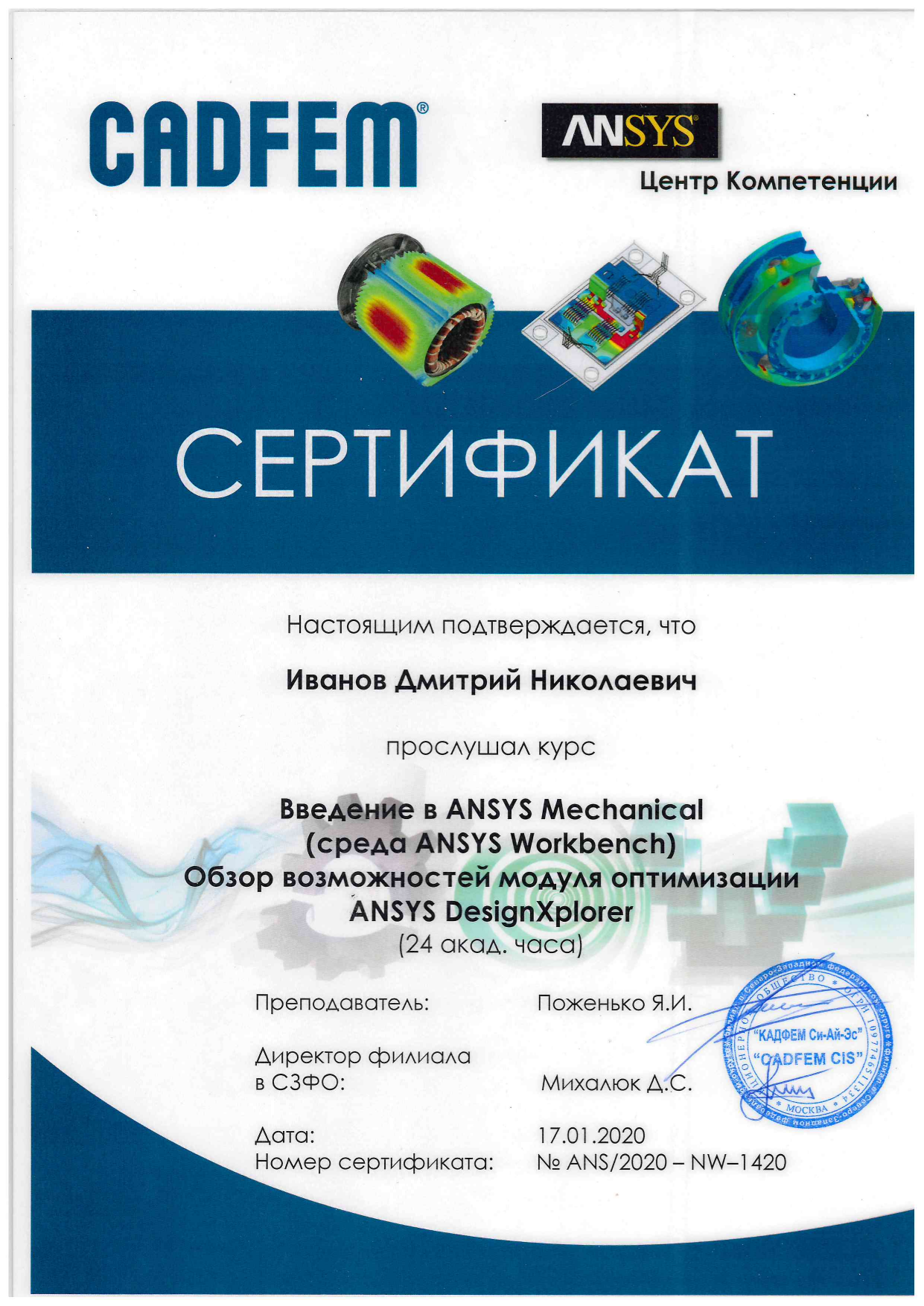
In 2020, received official Ansys software certification from CADFEM. Certificates confirm skills in physics setup, pre/post-processing, simulation automation, and PLM integration.